
Questions?
Give us a call! 585-266-2289
Give us a call! 585-266-2289
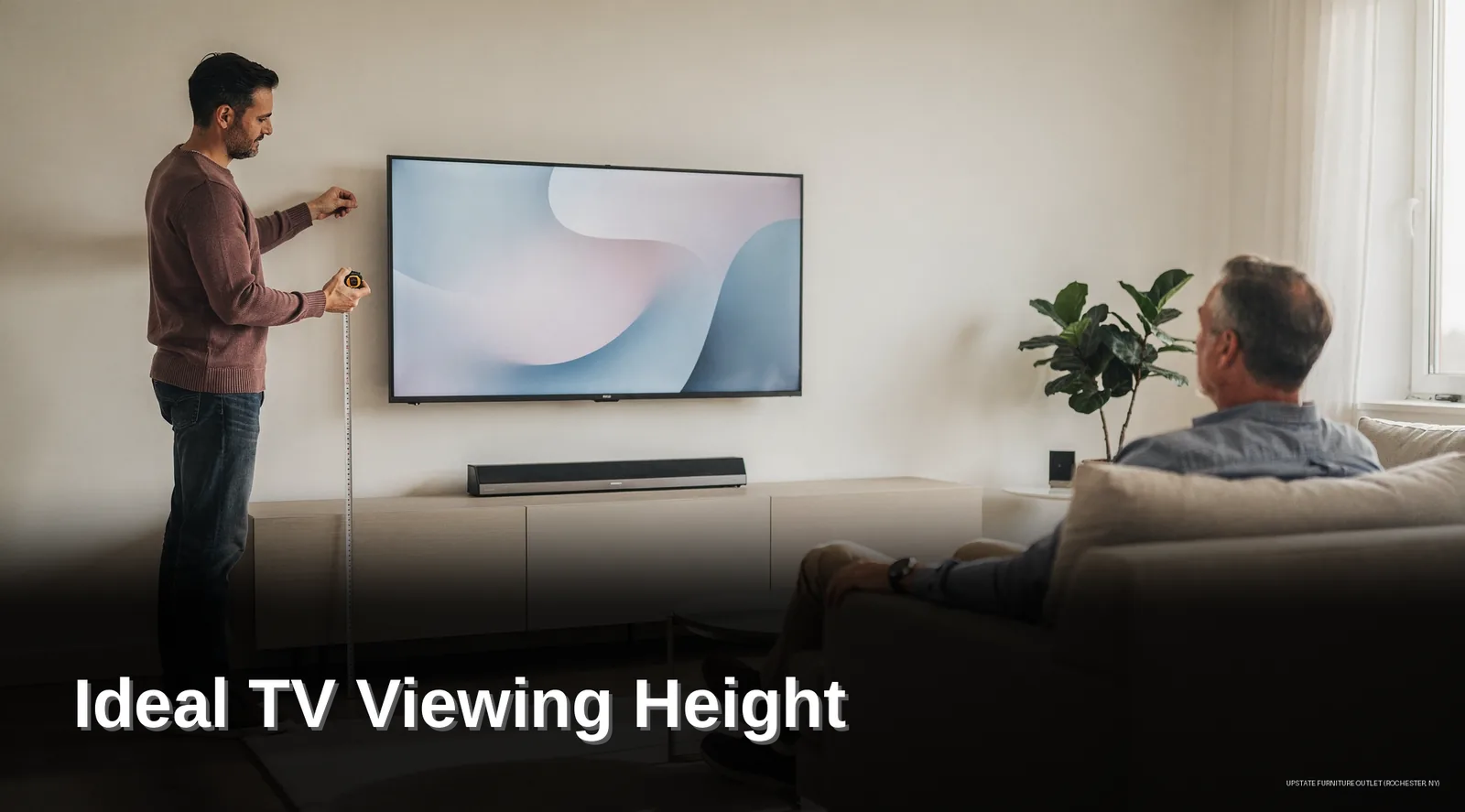
Comfortable TV Viewing depends on eye-level alignment: the TV's center should sit level with seated eye height, roughly 42 inches from the floor for standard sofas. Upstate Furniture Outlet designs low-profile sofas. Adjustable media consoles that keep screens centered, preventing neck strain and awkward viewing angles during long movie nights.
Incorrect TV placement causes eye strain, neck pain, and viewing discomfort affecting your overall experience.
Mount-It! offers over 50 years of experience in optimal TV height guidance and installation.
TV bracket height varies by screen size; no universal ideal height exists for all televisions.
Sofa distance from TV significantly impacts readability and comfort; improper placement strains eyes and neck.
The ideal TV viewing height places the center of the television screen directly at eye level when a viewer is seated. This single rule eliminates the two most common causes of physical discomfort during long viewing sessions. Both a TV mounted too high and a TV mounted too low can cause neck pain. Eye fatigue can ruin movie nights and binge-watching marathons. A TV mounted too high forces viewers to tilt their heads upward. A TV placed too low forces viewers to look down for extended periods, straining the upper spine.
Viewing posture dramatically shifts where eye level falls. An upright sitter has their eyes roughly at sofa seat height for TV viewing plus the distance from seat to eyes. Typically 10-14 inches above the cushion. A lounging viewer, reclining or lying down, drops their eye line several inches lower. The eye-level TV height shifts accordingly. Anyone who watches from multiple positions should split the difference or use a tilting mount to adjust the angle without moving the television itself.
|
Viewing posture |
Eye level relative to floor (typical 18-inch seat) |
TV center height |
|---|---|---|
|
Upright sitting |
38-42 inches |
38-42 inches |
|
Lounging/reclined |
30-34 inches |
30-34 inches |
Applying this rule takes three steps:
Measure seated eye height. Have the primary viewer sit in their usual spot and measure from floor to eye level.
Mark that height on the wall or furniture. This becomes the center point for the television screen.
Verify with a test. Set the TV at the marked height, sit back, and confirm no head movement is needed to see the full screen.
A TV stand height guide provides a useful shortcut: most 18- to 22-inch stands pair naturally with 42- to 55-inch TVs, aligning the screen center near the 40-inch mark that fits most upright viewers. Checking living room furniture dimensions before purchasing ensures the sofa seat height matches the planned TV stand height, preventing mismatched setups that force poor posture from day one.
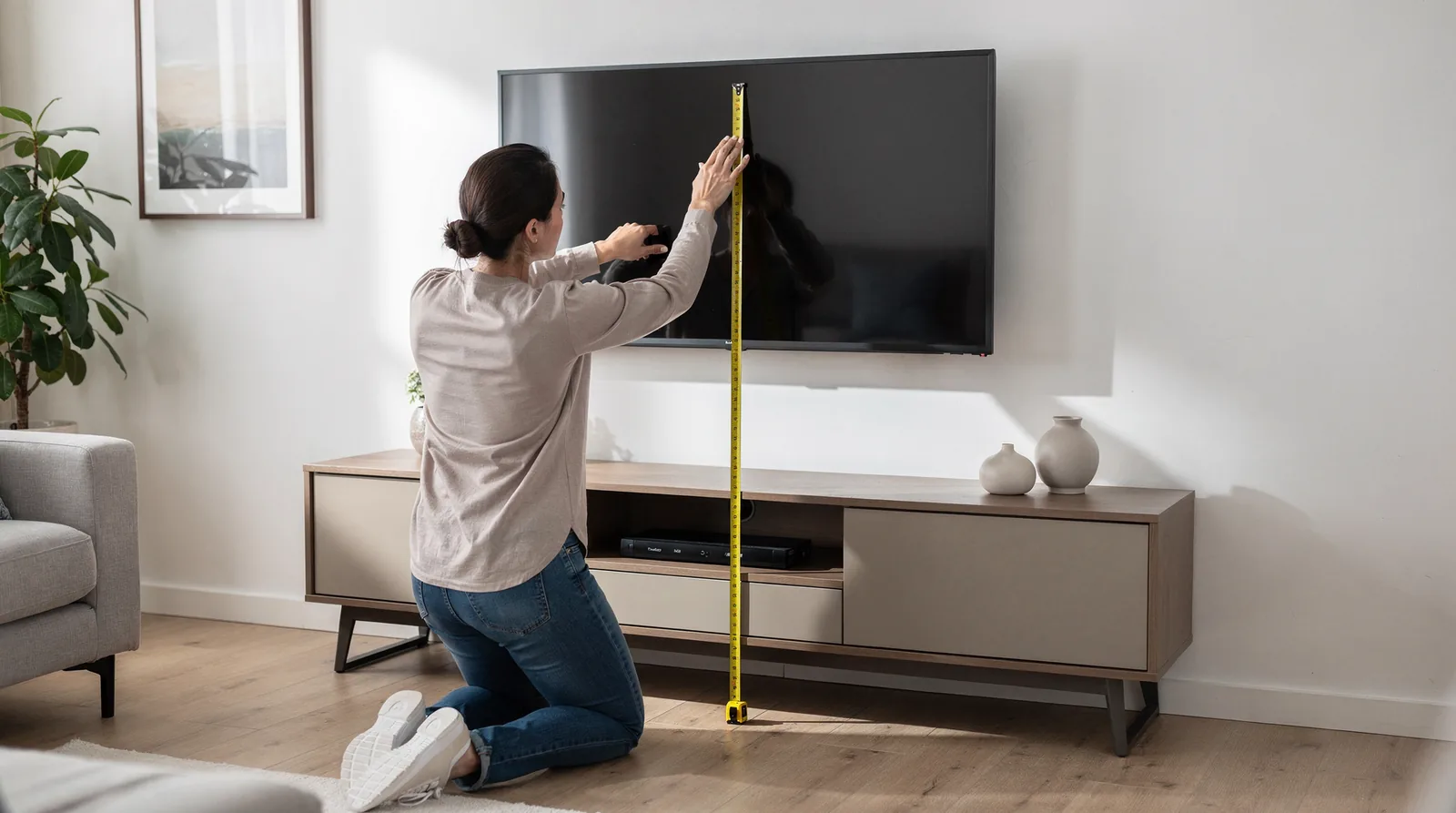
A TV stand height that aligns with the viewer's seated eye level prevents neck strain and eye fatigue. The correct height transforms a living room from an uncomfortable space into a genuinely relaxing environment. Most buyers focus on style or storage when selecting a console, overlooking the dimension that matters most for daily comfort.
A stand that sits even a few inches too high or too low creates a noticeably awkward viewing angle. This misalignment forces the neck into an unnatural position during a movie or show. Over time, that small discrepancy produces persistent eye fatigue and muscle tension. The living room furniture dimensions must account for the seated viewer, not just the television screen size.
The sofa seat height for TV viewing directly determines the correct stand measurement. A standard sofa seat sits approximately 18 inches from the floor. The eye-level TV height for a seated adult on that sofa typically falls around 42 inches from the ground. The TV stand should place the center of the screen at that 42-inch mark.
Key factors that influence the ideal stand height:
Sofa cushion height and firmness (softer cushions sink lower)
Reclining versus upright seating position
Room layout and primary viewing distance
TV screen size and mounting method (stand feet vs. wall bracket)
Measure the sofa seat height from the floor to the top of the cushion while someone sits naturally.
Add 24 inches to that seat height to estimate seated eye level (the average distance from seat to eyes).
Subtract half the TV height from that eye level number to find the maximum stand height.
Test the position by sitting in the primary viewing spot and looking straight ahead; the screen center should meet the gaze without tilting the head up or down.
A proper TV stand height guide eliminates the guesswork. Clients who follow this measurement process avoid the common mistake of placing the screen too high above a fireplace or too low on a short console. The result is a setup that feels natural from the first viewing session.
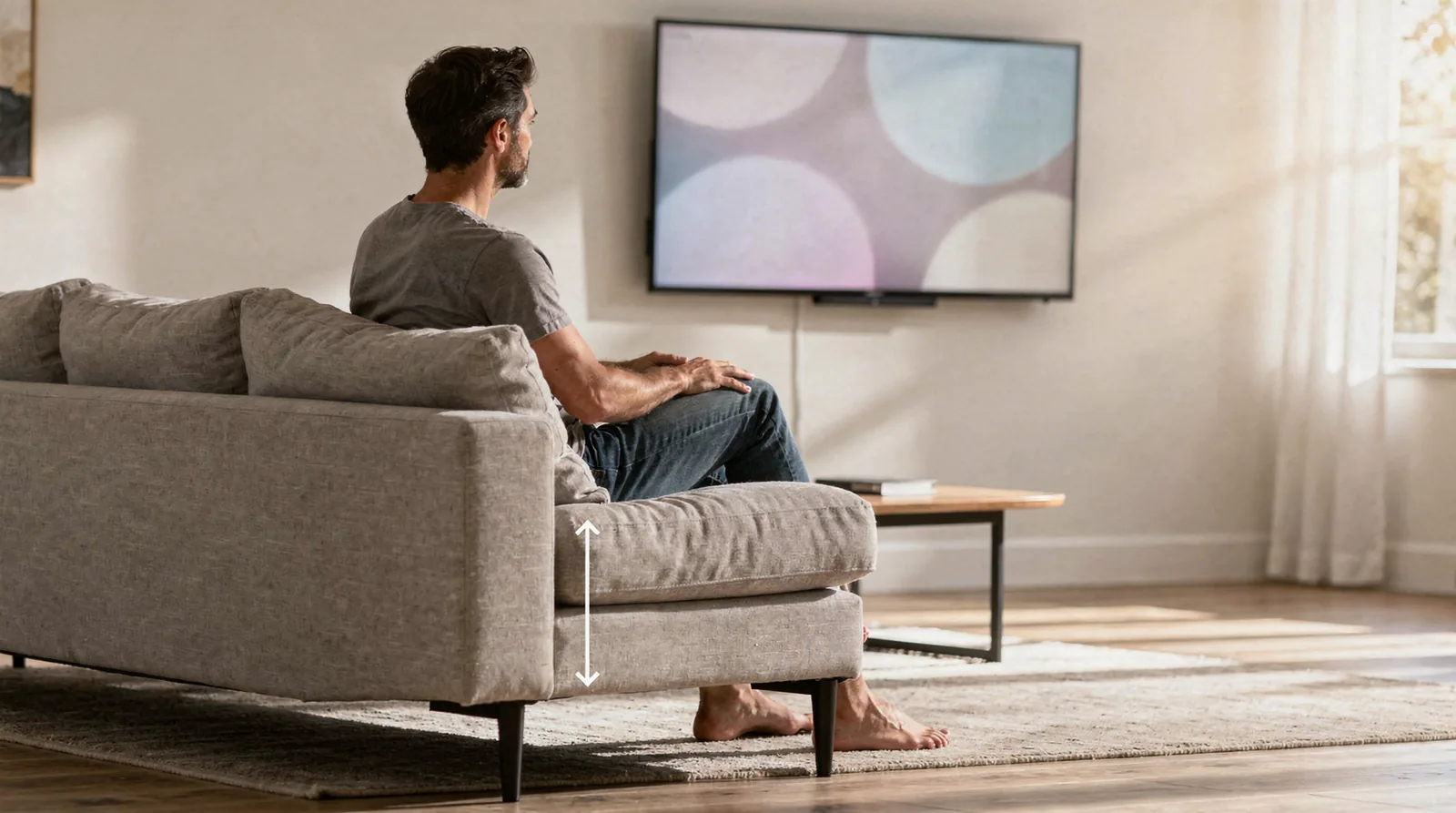
The right sofa seat height for TV viewing aligns the viewer's eyes with the vertical center of the television screen. This alignment prevents the neck strain and eye fatigue that result from looking up or down for extended periods. A mismatch between seat height and screen position forces the body into an unnatural posture, turning a relaxing activity into a source of physical discomfort.
Sofa seat height directly influences the distance between the viewer's eyes and the TV center. When the seat is too low, the eyes sit below the screen's midpoint, requiring an upward tilt of the head. When the seat is too high, the opposite occurs. This relationship makes seat height a critical variable in the overall living room furniture dimensions equation. The ideal setup creates a straight, level line of sight from the seated eye position to the center of the display.
The ideal TV viewing height depends on both the sofa seat height and the television's screen size. A larger screen demands a greater viewing distance to fill the field of vision properly. The following table shows the recommended sofa-to-TV distances based on common screen sizes:
|
TV Screen Size (inches) |
Ideal Viewing Distance (feet) |
|---|---|
|
32" |
4–5 ft |
|
55" |
7–8 ft |
|
65" |
8–10 ft |
|
75" |
10–12 ft |
These distances assume a standard sofa seat height of approximately 18 inches. Adjustments become necessary when the seat height deviates from this norm.
Incorrect seat height creates a chain reaction of physical strain. The eyes struggle to focus on a screen that sits above or below their natural horizontal plane. The neck muscles compensate by holding the head at an angle, leading to soreness over time. A TV stand height guide helps prevent these issues by recommending furniture that places the screen at the correct eye-level TV height relative to the seated viewer. Without this alignment, even a short movie session can produce noticeable discomfort.
The calculation starts with a single measurement: the viewer’s seated eye height. This measurement determines where the center of the television screen must sit for comfortable use. A person in Comfortable TV Viewing who measures their eye level at 42 inches above the floor needs the screen’s vertical midpoint at exactly 42 inches. Any deviation from this mark forces the neck into an unnatural tilt during long sessions.
A television mounted above eye level causes the viewer to look upward for extended periods. That upward gaze strains the neck muscles and dries out the eyes because the eyelids remain more open. Studies show that seats positioned with the screen center just 6 inches too high double the risk of reported neck discomfort during 90-minute viewing windows. The same problem occurs in reverse when the screen sits too low. The viewer slumps forward, straining the lower back and shoulders.
Follow these numbered steps to find the correct position:
Measure seated eye height. Have the primary viewer sit in their usual spot on the sofa. Use a measuring tape from the floor to the pupil. This number is the target height for the screen center.
Mark the wall at eye level. Place a light pencil mark or a removable sticker at that same height on the wall where the TV will hang.
Divide the TV height. Measure the television’s total height from top edge to bottom edge. Divide that number by two to get the screen’s vertical midpoint offset.
Account for sofa seat height for TV viewing. If the couch seat is low, the eye level drops accordingly. A sofa with a 17-inch seat height combined with a tall viewer may still require a 46-inch center mark.
Add or subtract offset. If the TV’s midpoint needs to sit at 42 inches and the screen itself is 24 inches tall, mount the wall bracket so the screen’s center hits exactly 42 inches, not the top or bottom edge.
Eye level (inches) | TV center height | Recommended screen size --- | --- | --- 36 | 36 inches | Up to 55 inches 40 | 40 inches | 55–65 inches 44 | 44 inches | 65–75 inches 48 | 48 inches | 75 inches or larger
This table applies to standard seating with a 17- to 19-inch sofa seat height for TV viewing. Reclining chairs called in Comfortable TV Viewing often drop the eye level by 2 to 4 inches because the viewer leans back, so adjust the TV center downward by that same amount.
Yes, living room furniture dimensions directly change the ideal number. A deep sectional sofa pushes the viewer farther from the screen, which raises the perceived height of the TV on the wall. At 8 feet of viewing distance, a 3-inch error in height feels minor. At 12 feet, that same error doubles in perceived distortion. Measure the distance from the sofa seat to the screen first, then apply the eye-level rule.
Ideal TV viewing height always follows the seated pupil, not the ceiling height or the fireplace mantel. The TV stand height guide recommends that any media console place the screen’s bottom edge no higher than 4 inches below the viewer’s eye level to preserve a natural downward gaze angle.
Three furniture dimensions determine whether a living room setup delivers comfortable viewing or causes physical strain. The TV stand height guide provides the first critical measurement. The stand directly controls where the screen sits in relation to seated viewers. Sofa distance from the television represents the second essential dimension, one that many homeowners overlook during room arrangement. The sofa seat height for TV viewing completes the trio. Seat height determines how the viewer's eyes align with the screen center.
In real-world living rooms, TV stand height is the detail that quietly determines whether a setup feels cinematic or uncomfortable after 30 minutes. A stand that positions the screen too high forces the neck into a tilted-back position. A stand that sits too low creates a downward gaze that strains the upper back. The correct height places the television's vertical center at the seated viewer's natural eye level, eliminating the need for any head adjustment during extended watching sessions.
The distance from the television to the sofa is one of the most overlooked details in living room furniture arrangement. Getting this measurement wrong produces two common problems: a screen that feels overwhelming and causes eye fatigue from being too close, or a screen that appears too small and forces squinting from being too far. The living room furniture dimensions must account for both the screen size and the primary seating position. The primary seating position to create a balanced field of view.
Televisions come in different sizes, and viewers have their own preferred positions for watching, but the fundamental principle remains consistent. The eye level TV height should match the seated viewer's horizontal line of sight, which means the ideal TV viewing height depends directly on the sofa's seat height. A low sofa paired with a tall stand creates the same neck strain as a high sofa with a low stand. These two dimensions must work together.
|
Dimension |
Primary effect on comfort |
|---|---|
|
TV stand height |
Controls vertical screen position relative to eye level |
|
Sofa distance |
Determines field of view and eye fatigue risk |
|
Seat height |
Sets the baseline for eye level alignment |
The three dimensions form an interdependent system. Changing one measurement without adjusting the other two guarantees an uncomfortable viewing experience. Homeowners who measure all three before purchasing furniture avoid the common mistake of buying a beautiful stand that forces an awkward viewing angle.
Setting the perfect height for a television requires a systematic approach that starts with the viewer's seated position. The process involves three core measurements: eye level, screen size, and furniture height. Getting these right prevents the neck strain and awkward angles that plague poorly arranged rooms. Clients who skip these steps often find themselves adjusting seating or squinting through entire movies.
The first step requires measuring the eye-level TV height from the typical seated position. A client should sit naturally on the couch or chair they use most often. Another person measures from the floor to the center of the client's eyes. This measurement becomes the target for the television's center point. The sofa seat height for TV viewing directly influences this number. A low sofa produces a lower eye level than a high-backed recliner.
Living room furniture dimensions matter because the sofa's distance from the screen affects perceived height. The ideal TV viewing height shifts slightly when viewers sit closer or farther away. A larger screen demands greater distance to fill the field of vision comfortably. A 65-inch television, for example, requires more space between the sofa and the wall than a 43-inch model. The TV stand height guide typically recommends matching the stand's top surface to the eye-level measurement from step one.
The television's center point should sit exactly at the measured eye level. This applies whether the client uses a stand or a wall mount. A stand that places the screen too high forces the neck into extension. A stand that sits too low causes downward strain over time. The eye-level TV height remains the single reference point throughout this adjustment.
Sofa height alters the starting eye level by several inches. A low-profile sofa places the eyes around 36 inches from the floor. A taller seat cushion raises that number to 42 inches or more. The television height must shift accordingly to maintain alignment.
Avoiding common TV height mistakes starts with understanding that the screen's placement dictates physical comfort. Mounting a TV too high forces viewers to tilt their heads upwards, causing neck pain and eye fatigue. A TV placed too low creates similar discomfort, requiring viewers to look down for extended periods. Both extremes ruin the ideal TV viewing height for any room.
The human neck holds roughly 10-12 pounds of head weight. Tilting it even slightly increases the load on cervical muscles. Incorrect second distance from the sofa strains eyes just as much as height errors. Viewers end up with eye strain, neck pain, or subtitles they still cannot read. The body compensates for poor angles, and that compensation leads to fatigue within minutes.
Clients can test their setup in under a minute using a simple seated posture check. The sofa seat height for tv viewing determines where the eyes naturally rest, so the measurement starts there.
Sit comfortably in the primary viewing seat with the back supported.
Close the eyes, relax the neck, then open them naturally.
Mark the exact spot on the wall where the gaze lands.
Compare that mark against the current TV center point.
The screen center should align with that natural gaze line. Any deviation of more than a few inches signals a problem. A proper TV stand height guide prevents most of these errors before mounting begins.
Living room furniture dimensions dictate the starting point for every height calculation. A low-profile sofa with a 16-inch seat height requires a different TV position than a tall recliner with a 20-inch seat. The eye-level TV height shifts with each furniture change, so re-measuring after any new purchase matters. Getting the distance right from the start eliminates the need for awkward neck craning and squinting during every movie night.
Furniture selection directly determines whether a television sits at the correct height for comfortable viewing. A properly chosen TV stand height guide serves as the foundation for achieving the ideal TV viewing height without requiring wall mounting or additional brackets. The right furniture eliminates guesswork and prevents the physical discomfort that comes from a poorly positioned screen.
The sofa seat height for TV viewing creates the baseline measurement for the entire entertainment setup. A low-profile sofa with a seat height of 15-17 inches demands a lower TV position than a taller recliner or sectional with a 19-21 inch seat height. The distance between the sofa and the screen also matters. A couch placed 8 feet from a 65-inch television requires different height calculations than one positioned 5 feet away. Ignoring these living room furniture dimensions leads to awkward viewing angles that force guests to tilt their heads up or down throughout a movie.
Adjustable furniture offers the most practical solution for households with varied seating preferences. A TV stand with multiple height settings accommodates different screen sizes and viewing positions. Some entertainment centers include adjustable shelving that raises or lowers the television by 3-6 inches. For homes where family members prefer different seating postures, some sitting upright, others reclining. A stand with a tilting mount built into the frame provides flexibility without sacrificing stability.
Steps to match furniture height to eye level:
Measure the eye-level TV height while seated in the primary viewing position, typically 36-42 inches from the floor for an average adult
Select a TV stand where the center of the screen aligns with this measurement
Account for the television's own height: a 55-inch screen requires a lower stand than a 43-inch model to keep the center point consistent
Test the setup by watching a 30-minute program; neck strain or eye fatigue signals a height mismatch
A stand that is even 4 inches too high forces the neck into a 10-degree upward tilt, creating tension within 20 minutes of viewing. The right furniture eliminates this problem before it starts.
Finding the right furniture height transforms your living room into a comfortable viewing space where you can truly relax and enjoy your entertainment. By considering your seating position, screen placement, and personal preferences, you create an environment tailored to your household's needs. Quality furniture supports comfort. Proper viewing angles make all the difference in how you experience your favorite shows and movies for years to come.
The TV's center should sit level with seated eye height, roughly 42 inches from the floor for standard sofas. Upstate Furniture Outlet's low-profile sofas and adjustable media consoles help keep screens centered to prevent neck strain.
Yes, upright sitters have eye level around 38-42 inches, while lounging or reclined viewers drop to roughly 30-34 inches. Adjusting TV height or using a tilting mount accommodates different viewing positions comfortably.
Most 18- to 22-inch stands pair naturally with 42- to 55-inch TVs, placing the screen center near the 40-inch mark that suits most upright viewers. Matching stand height to sofa seat height prevents poor posture.
Your living room should be the most inviting space in your home, and Upstate Furniture Outlet makes creating that haven both easy and affordable. Our living room furniture collection features everything from plush sofas and versatile sectionals to sleek coffee tables and entertainment centers, all at outlet prices that leave traditional retailers in the dust.
Whether you're furnishing your first home or giving your family room a complete refresh, each piece is chosen for quality craftsmanship, lasting comfort, and styles that elevate your everyday life. Don't let another movie night or casual get-together happen in a space that feels unfinished. Visit Upstate Furniture Outlet today and discover how far your budget can really stretch.
Delivery
Check what it costs to get this order to your door.